Experimenta is dead

What is the role of an art and technology organisation in 2026?

In 1996 I visited an Experimenta exhibition in the decaying La Trobe Street power station, a cavernous decommissioned industrial plant in the middle of Melbourne city. Walking through dark corridors to find otherworldly and futuristic installations felt dangerous, the show was charged with electricity as it attempted to define a vision of the future that was yet to emerge. Utopian, dystopian, the next five minutes…

I decided then and there that this is what I wanted to do. Artists like Ian Haig, Philip Samartzis, Martine Corompt, Philip Brophy were in this show and I found out that these people taught art at a place called RMIT Media Arts. I made it my mission to be there. After studying there, thirty years later, I count them as friends and mentors.

So it’s with sadness that I open my email in late June 2026 and see that Experimenta has gone into receivership and is no longer an active organisation. State and federal funding collapse? Same curator and curatorial vision for the last twelve years? Still hanging onto a model of expensive national touring? All potential factors for the decline.

The influential Experimenta magazine MESH, which I read avidly as a young man, pointed to a new world of interconnected nodes, memetic replication, always-on broadband consciousness and disruptive technological social upheaval. That infrastructure wave has now arrived and provided for uninterrupted doom/hope scrolling, GenAI Sloptivism, OnlyFans, LLM psychosis, facebook boomer radicalisation, pervasive data-mining and geo-tracking. The shadowy cyberpunk vision I fantasised about as a 17 year old surfing the mailing lists and forums has been embraced, made safe and sold back to me. Nothing is beyond capture.

Talking about mid to late 90s net.art culture feels like telling ‘Grandpas old war stories’, a far off place of adventure and mystery, a swashbuckling semiotic counter-culture where anonymous language agents such as Netochka Nezvanova stalked the discourse. Weaponised ciphers wielded as a attack vectors. Midnight coding, high on instant coffee, 28.8k modem chirping, eight hours of sleep is unnecessary. “Yeah yeah, Jodi, irrational.org, Nettime mailing list, Tactical Media — go back to sleep gramps”.

My small contribution to the legacy of this organisation was Experimenta Social, a series I devised, curated and hosted from 2016. An informal audiovisual salon where artists, audiences and *ultra-hobbyists* could meet each other, listen to presentations and ask questions. Produced alongside Nicky Pastore and hosted at ACMIX, I was happy with the program I developed to profile the work of Sean Dockray, Lara Thoms, Eugenia Lim, Philip Brophy, Holly Childs, Christopher LG Hill and Matthew Sleeth amongst others.

I hope there is an effort to create an online archive of the publications and activities produced by Experimenta and this Australian media art legacy doesn’t evaporate into landfill or e-waste recycling bins. It seems the credit cards have been seized, hosting bills haven’t been paid and the website is already down.

Experimenta needed one more shapeshift, one more shedding of skin, like it did when it left the name Modern Image Makers Association to become Experimenta in the mid-nineties… it missed that one last reinvention to stay relevant.

Dear friends and supporters of Experimenta,

We are writing with the sad news that after four decades at the forefront of media arts in Australia, the board of Experimenta has made the decision to wind down the organisation in 2026. Despite sustained efforts to diversify income and adapt our operating model, the reduction in public arts funding at both the federal and state levels has made it impossible to sustain operations at the level required by Experimenta’s mission.

On 18 June 2026, Garth O’Connor-Price of William Buck was appointed as Liquidator of Experimenta. Should you have any queries in relation to claims, we encourage you to contact his office on (03) 9824 8555 or via email at vic.creditorinfo@williambuck.com.

Founded in 1986, Experimenta has been a pioneering force in commissioning, exhibiting and touring contemporary art shaped by technology. From its origins as the Modern Image Makers Association to its evolution into a globally recognised arts organisation, it has consistently championed artists working at the intersection of art, science and technology, helping redefine the boundaries of contemporary practice. Across almost 40 years, Experimenta has built a remarkable legacy. It has supported generations of artists, from emerging voices to internationally recognised practitioners, while fostering ambitious, collaborative works that bring together technologists, scientists, researchers and creatives. Its triennials, which include a national touring program, have reached audiences across metropolitan and regional Australia, expanding public engagement with new and experimental art forms and contributing significantly to their development in this country.

Experimenta’s work has never been confined to traditional formats. It has embraced creative coding, robotics, bio art, virtual and augmented reality, and data-driven practices, encouraging audiences to explore complex contemporary issues and to reflect on what it means to be human in an age of rapid technological change.

We extend our deepest gratitude to the many supporters, both public funders and private donors, who have sustained Experimenta over its lifetime, to the organisation’s past and present staff, and to the extraordinary artists from across Australia and internationally who have worked with Experimenta over the last four decades.

Experimenta’s impact will endure in the artists it has supported, the audiences it has inspired, and the ideas it has brought into the world. While the organisation’s operations are drawing to a close, its influence will continue to shape the evolving landscape of art and technology for years to come.

Yours sincerely,

The Experimenta Board
Daniel Crooks, Kelly Gellatly, John Merakovsky, Emma Parker & Pinky Tang
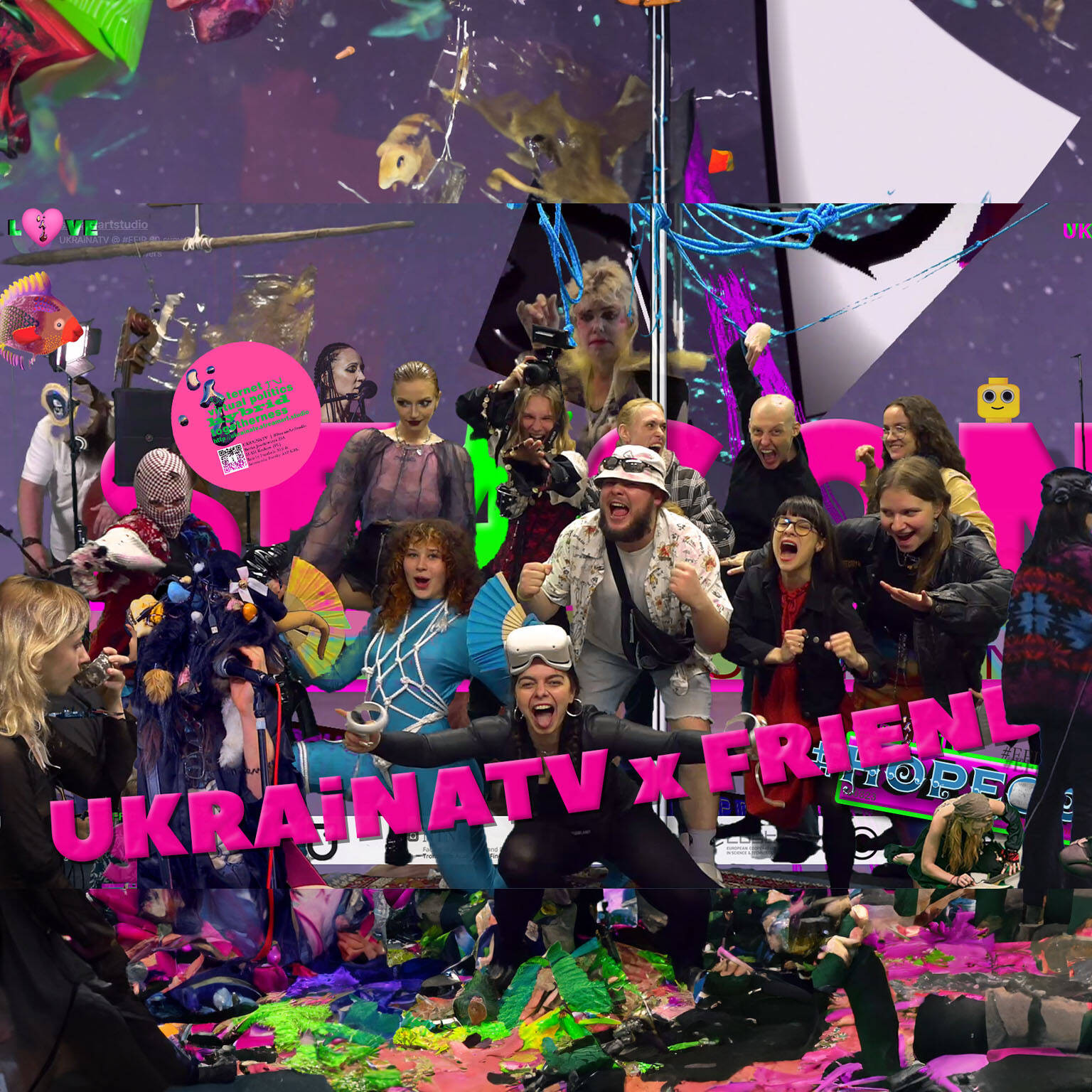
ACMI ART+FILM: UKRAiNATV

Join us for a conversation with founders of UKRAiNATV, moderated by Geert Lovink and Emile Zile.

https://www.acmi.net.au/whats-on/artfilm/ukrainatv/

UKRAiNATV is an experimental media project and Internet TV station that blends real and virtual worlds through live audiovisual bridges, streaming and global networks. Based in Krakow, Poland, it brings together artists, activists, musicians and media enthusiasts from Ukraine, Poland, Belarus and beyond – many of whom are refugees or nomadic creators unable to express themselves freely in their own countries. Founded in response to the Russian invasion of Ukraine in 2022, UKRAiNATV aims to create a space of solidarity and safety for marginalised communities.

Operating from #StreamArtStudio, the collective mixes new and used equipment to produce innovative, hybrid content, connecting people worldwide through transnational collaborations. Despite its instability, UKRAiNATV is a powerful hub that explores the intersection of art, politics, and media in times of conflict and change. It is one of the most experimental and resource-limited TV networks in the world, born out of a need for creative and humanitarian expression.

About Geert Lovink
Geert Lovink is a Dutch media theorist, internet critic and author of Sad by Design (2019) and Stuck on the Platform (2022) and Extinction Internet. He received his PhD from the University of Melbourne. In 2004 he founded the Institute of Network Cultures (www.networkcultures.org) at the Amsterdam University of Applied Sciences (HvA). In 2022 he was appointed Professor of Art and Network Cultures at the University of Amsterdam Art History Department. Since early 2022 he has been involved in support campaigns for Ukranian artists, in particular UkrainaTV, a streaming art studio/network, operating out of Krakow.

About Emile Zile
Emile Zile is an artist, filmmaker and performer. Using the overlooked remnants of network culture to create his performances, films and exhibitions, Emile engages with the boundaries of language to explore contemporary digital selfhood.

Melbourne Book Launch — Screenic: Politicised Writings on Being Screened by Philip Brophy

Please join us for a drink to celebrate the launch of Philip Brophy’s new book Screenic. There will be a reading from Emile Zile, and more…

Conners Conners
Fitzroy Town Hall
201 Napier Street Fitzroy
Saturday, November 30, 4-6pm

https://www.connersconnersgallery.com

The Reader

The reader is the audience. The reader is the market. The reader is the critic. The reader is the buyer. The reader is the voice in your head.

Over the course of the Stallholder Fair, Emile Zile will read publicly, privately, obviously, convulsively, discreetly, silently, annoyingly, desperately, lazily.

https://artbookfair.melbourne

Melbourne Art Book Fair
23 May – 02 June
Great Hall, NGV International
180 Saint Kilda Road, Southbank Melbourne, VIC, Australia

RMIT ACMI AudienceLab

BAITHOUSE – Henry Lai-Pyne, Emile Zile, Audrey Pfister, Liam Wolfs, Babs Rapeport

https://www.acmi.net.au/whats-on/acmi-rmit-audience-lab/march-expo-2024/

BAITHOUSE is a 3D animated motion-capture livestream talk show. Using live motion capture, physical performance and animation, guests and hosts will be presented in a constructed digital world and in conversation with one another. As an expanded form of hybrid public programming, performance and critical discourse BAITHOUSE is a new digital and artistic platform that will host hyper-threaded conversations around networked technologies, contemporary aesthetics and new media. Accessible to view online and presented as a hybrid live event for local audiences BAITHOUSE invites guest artists, writers, academics, and designers from across Australia to engage in Q&As and discussion around swamp technology, digital life, and internet (sub-)cultures.

Session times: 11.30am, 1pm & 2.30pm
ACMI Fed Square 16/03/24

ACMI Gallery 5 commission ‘We Are As Gods’

ACMI Gallery 5 – We Are As Gods
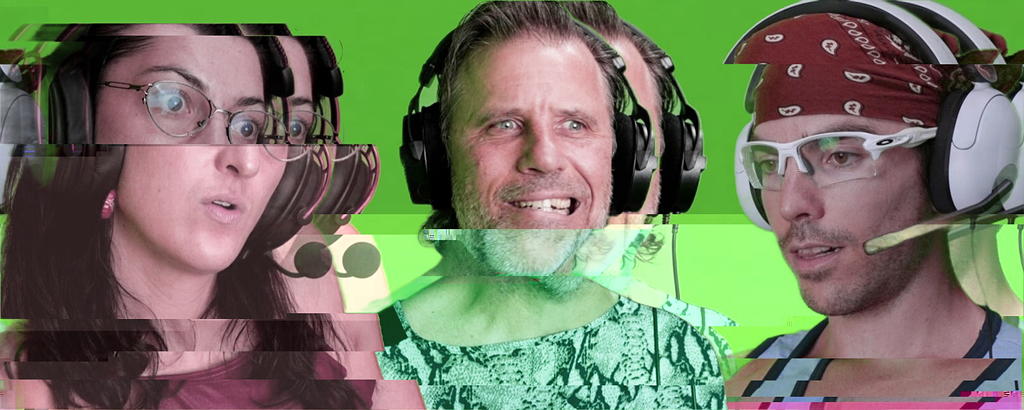
We Are as Gods explores the informal, spontaneous commentary that accompanies cooperative videogame streaming. Through a series of portraits of gamers in the act of live streaming, we hear dialogue that is simultaneously directed at the players themselves, at a remote audience, at a rival player of the game and at anonymous third parties. Using longform recording, stream of consciousness rants and animation, We Are As Gods seeks to find the human in the network, the flesh in the data packet.

Work commissioned through Gallery 5 will enter the ACMI collection.

Many thanks to Senior Curator Fiona Trigg for her focus and patience and Jini Maxwell, Isabella Hone-Saunders at Australian Centre for the Moving Image, Visual FX don Henry Lai-Pyne for being the best in the game, Web maestro Simon Lofler for the clickable NPC streaming interactivity, Flood Slicer for the green screen studio and all Mountain Dew drinkers out there preparing to raid.

Showing now online at ACMI; https://www.acmi.net.au/whats-on/emile-zile-we-are-as-gods/

Adelaide Film Festival, EXPAND Lab 2023

https://adelaidefilmfestival.org/expand-2023-participants/

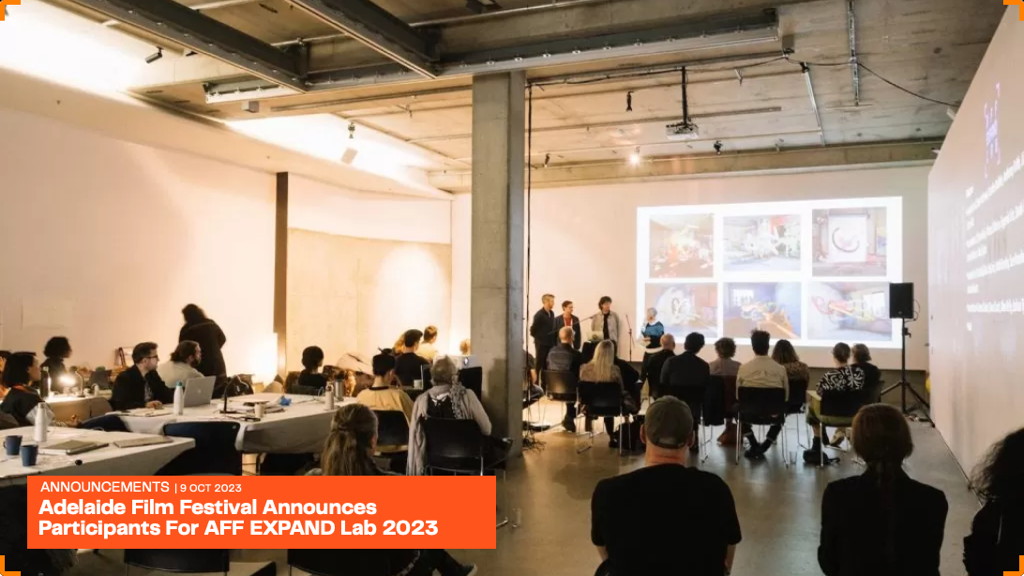
Adelaide Film Festival (AFF) announced today the 30 participants selected to take part in AFF EXPAND Lab 2023. This intensive five-day Lab brings together some of Australia’s most creative and inventive artists, filmmakers and XR and VR practitioners in a development and commissioning process to foster new ideas for moving image artworks.

Following a national call for Expressions of Interest, 95 applications were received for the 30 places in the Lab (15 South Australian and 15 national participants). Participants will form teams during the Lab and develop concepts to pitch for the AFF/Samstag $100,000 Moving Image Commission. In addition, two projects will be selected for mentoring by Illuminate Adelaide and the Art Gallery of South Australia.

The mentors for 2023 AFF EXPAND Lab are time-bending digital artist DANIEL CROOKS, theatre maker & media artist ROBERT WALTON, highly respected moving image & film producer BRIDGET IKIN with video artist and filmmaker AMOS GEBHARDT joining as a mentor for the first part of the lab.

AFF EXPAND Lab is an initiative of Adelaide Film Festival with Samstag Museum of Art, Art Gallery of South Australia and Illuminate Adelaide. It is supported by Principal Partner The Balnaves Foundation and Arts South Australia.

Tully Arnot (NSW) – Visual Artist, Media Artist, XR/VR Creator

Max Brading (SA) – Visual Artist, Media Artist, XR/VR Creator

Jake Bresanello (SA) – Visual Artist, Media Artist, Filmmaker

Thom Buchanan (SA) – Visual Artist

Linda Chen (ACT) – Writer, Performer

Marcus Chong (VIC) – Visual Artist, Filmmaker

Chloe de Brito (NSW) – Visual Artist, Filmmaker

Miles Dunne (SA) – Visual Artist, Media Artist

Nisa East (NSW) – Filmmaker, Cinematographer

Deborah Kelly (NSW) – Visual Artist

Isobel Knowles (VIC) – Visual Artist, Media Artist, Filmmaker, XR/VR Creator

Bryce Kraehenbuehl (SA) – Visual Artist, Filmmaker, Videographer

Anna Lindner (SA) – Visual Artist, Filmmaker, Writer

Liang Xia Luscombe (VIC) – Visual Artist, Media Artist, Filmmaker

Chris Luscri (VIC) – Filmmaker

Charlotte Mars (NSW) – Filmmaker

Orlando Mee (SA) – Visual Artist, Media Artist, XR/VR Creator, Games Creative

Conor Mercury (SA) – Filmmaker

Kim Munro (SA) – Media Artist, Filmmaker

Yasemin Sabuncu (SA) – Visual Artist, Media Artist, Videographer, Games Creative

Ryan Sahb (SA) – Visual Artist, Media Artist, Filmmaker, Videographer

Cynthia Schwertsik (SA) – Visual Artist, Performance

Liam Somerville (SA) – Media Artist, Filmmaker, XR/VR Creator, Games Creative

Van Sowerwine (VIC) – Visual Artist, Media Artist, Filmmaker, XR/VR Creator

Will Spartalis (SA) – Visual Artist, Media Artist, Filmmaker, Composer

Kate Vinen (NSW) – Filmmaker

Yandell Walton (VIC) – Visual Artist, Media Artist, XR/VR Creator

Raymond Zada (SA) – Visual Artist, Media Artist, XR/VR Creator

Emile Zile (VIC) – Visual Artist, Media Artist, Filmmaker

Third Year PhD Milestone complete

Entering the final stretch of my practice-based PhD at Digital Ethnography Research Center RMIT. Presentation to outside assessor occurred on 5 July 2021, no revisions required.

Next steps;
– Revise and rewrite chapters on public performance works ‘4500 Lumens’, ‘Audience / Performer / Lens (after Dan Graham)’, ‘Becoming The Icon’
– Write concluding chapter and refine introduction chapter
– Confirm public screening and talk in late 2021 at ACMI Cinemas

Becoming the Icon with Lilian Steiner

Becoming The Icon development with Lilian Steiner at Artshouse North Melbourne, CultureLAB City of Melbourne.

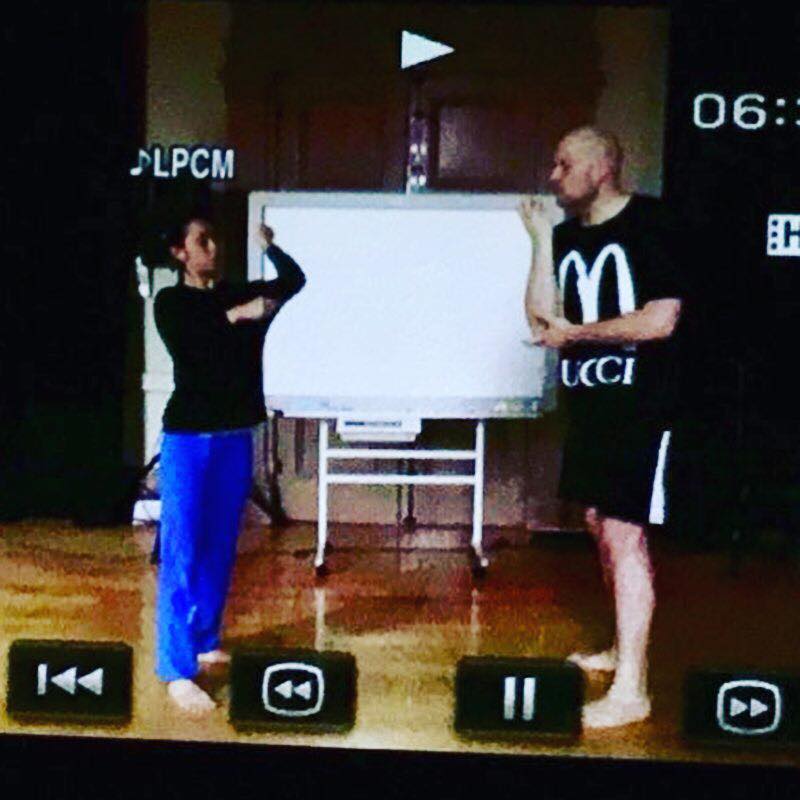
Becoming The Icon is a new performance duet created and performed by Lilian Steiner and Emile Zile.

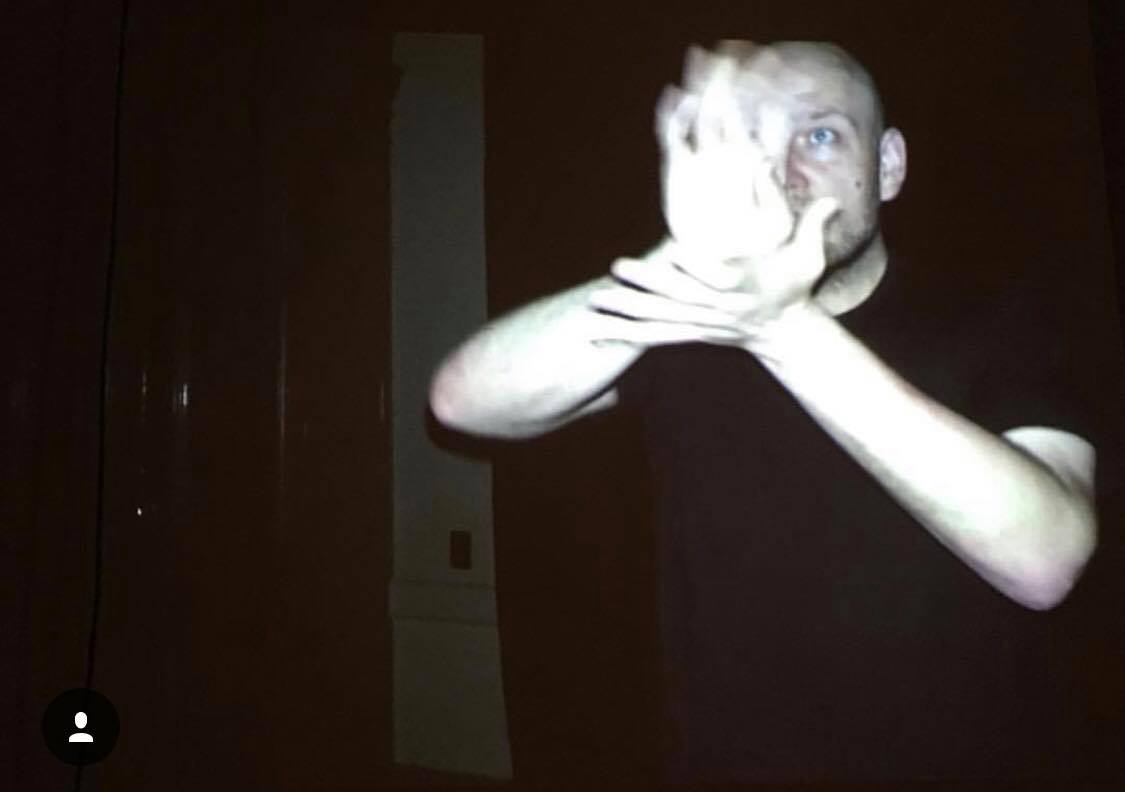
Through an exploration of gesture, two bodies explore political speech and the body as a conduit of thought, emotion and truth.

Concept/Performers: Lilian Steiner & Emile Zile

The first development of Becoming The Icon occurred in October 2018 with the support of the Arts House Culture Lab residency program (with financial support by City of Melbourne). The second stage development will take place in May 2019 at Arts House North Melbourne followed by a public presentation in 2020.

PhD at Digital Ethnography Research Centre

I’m pleased to announce in February I will be embarking on PhD study at the Digital Ethnography Research Centre (DERC), Royal Melbourne Institute of Technology, Australia.

A 3.5 year practice-based research period to study lens-based performance on video sharing networks, gesture and interface online and the influence of algorithmic cultures on the social body.

The support offered by a Design and Creative Practice ECP scholarship for the duration of the study will greatly support my practical outcomes, including new performance work, large-scale film making projects and exhibitions.

My research blog camerashy.video is now online and serves as a public platform for outcomes related to the PhD.

DERC focuses on understanding a contemporary world where digital and mobile technologies are increasingly inextricable from the environments and relationships in which everyday life plays out.

DERC excels in both academic scholarship and in our applied work with external partners from industry and other sectors.

DERC approaches this world and how we experience it through innovative, reflexive and ethical ethnographic approaches, developed through anthropology, media and cultural studies, design, arts and documentary practice and games research.

Our research is incisive, interventional and internationally leading. Going beyond the call of pure academia we combine academic scholarship with applied practice to produce research, analysis and dissemination projects that are innovative and based on ethnographic insights.

DERC partners and collaborates with a range of institutions in Australia and globally, including other universities, companies and other organisations. This includes collaborative research projects, conferences, symposia and workshops, and international visits, fellowships and publications.

The Digital Ethnography Research Centre (DERC) was established in December 2012 by Larissa Hjorth and Heather Horst with the aim of consolidating and further developing RMIT’s strength in international digital innovation. The Centre is now Directed by Sarah Pink who will be taking it into its second stage of development from 2016.

DERC members are aligned into Labs to represent their research interests, DERC Labs include:

Data Ethnographies Lab
Design+Ethnography+Futures (D+E+F) Lab
Bio Inspired Digital Sensing-Lab (BIDS-Lab)
Digital Transformations Lab
Visual Impact
Migration and Digital Media Lab